
Companions are people, not possessions
Additional companions can join where the world allows. They can have opinions, loyalties, goals and limits that differ from your player characters.
People with their own lives
Meet autonomous companions and NPCs with memory, loyalties, private knowledge and reasons of their own.
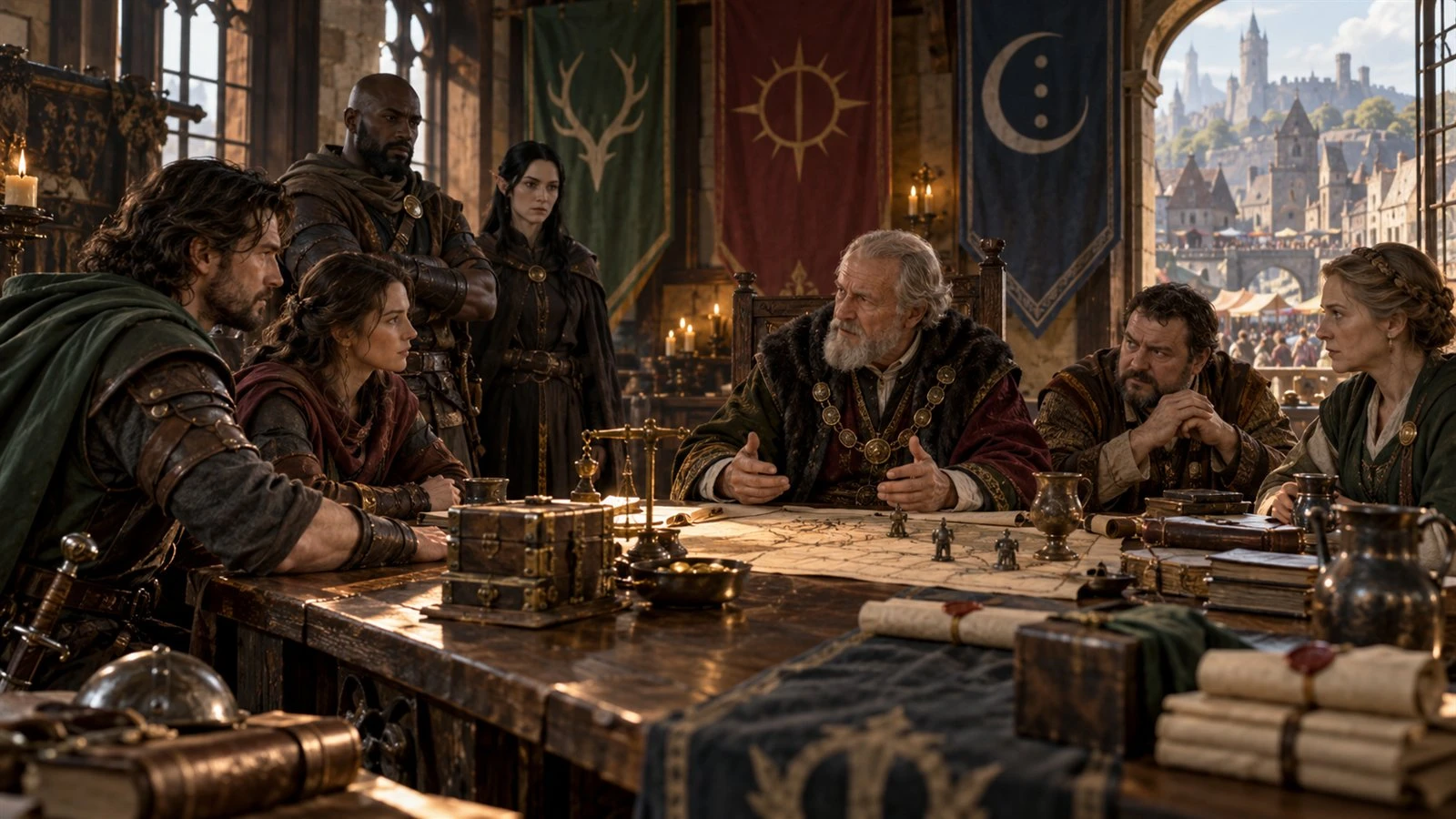
What this means for your play
The people around your party are not disposable dialogue. Friendships, rivalries, misunderstandings and alliances become part of your continuing campaign.
Additional companions can join where the world allows. They can have opinions, loyalties, goals and limits that differ from your player characters.
Help, betrayal, promises and failures can affect trust later. Returning to a person means meeting someone with a shared history.
A witness, a rumour and a verified discovery are different things. NPCs do not automatically know what only your party saw.
People can pursue work, obligations and interests elsewhere. You enter their lives rather than bringing them into existence only when needed.
In depth
Read the part that interests you. Each capability connects to your party and the continuing world.
Persistent companions can join the journey where the world and campaign allow them.
A companion can become part of your campaign history rather than simply another slot on a combat screen.
VERIDIAN's NPCs are autonomous. They are not extensions of the player. They can exist, act, remember, form relationships, hold opinions and react to previous events.
An NPC should not know something merely because the narrator knows it. Knowledge belongs to characters and the world.
Relationships are persistent. A character you meet early in the campaign can matter much later.
Romantic, professional, political, personal and faction relationships can all become part of character history where appropriate. The world is built around recurring people rather than disposable encounters.
NPCs can retain memory of previous interactions and world events.
VERIDIAN distinguishes between objective world truth and character knowledge. An NPC can know something your party does not. Your party can know something a settlement does not.
Information can travel through the world rather than instantly appearing in everyone's mind.
A concrete example
An illustrative situation: your party agrees to help a local craftsperson but pursues another urgent lead first. The delay can matter to that person’s plans and trust. A later meeting begins from what happened, not from a reset greeting or a newly invented friendship.

Keep exploring
A discovery, relationship or capability can create new choices elsewhere in the game.
Influence and belonging
Find your place among guilds, factions, civic powers and religious institutions with interests beyond your party.
Read the full guide →
A campaign that becomes yours
Follow authored missions, pursue your own goals and build a long history of achievements, setbacks and consequences.
Read the full guide →Continue in VISINVOKE
Create a free VISINVOKE account and review VERIDIAN access in your account. Build a party whose choices leave a lasting place in the world.
Create a free VISINVOKE account